

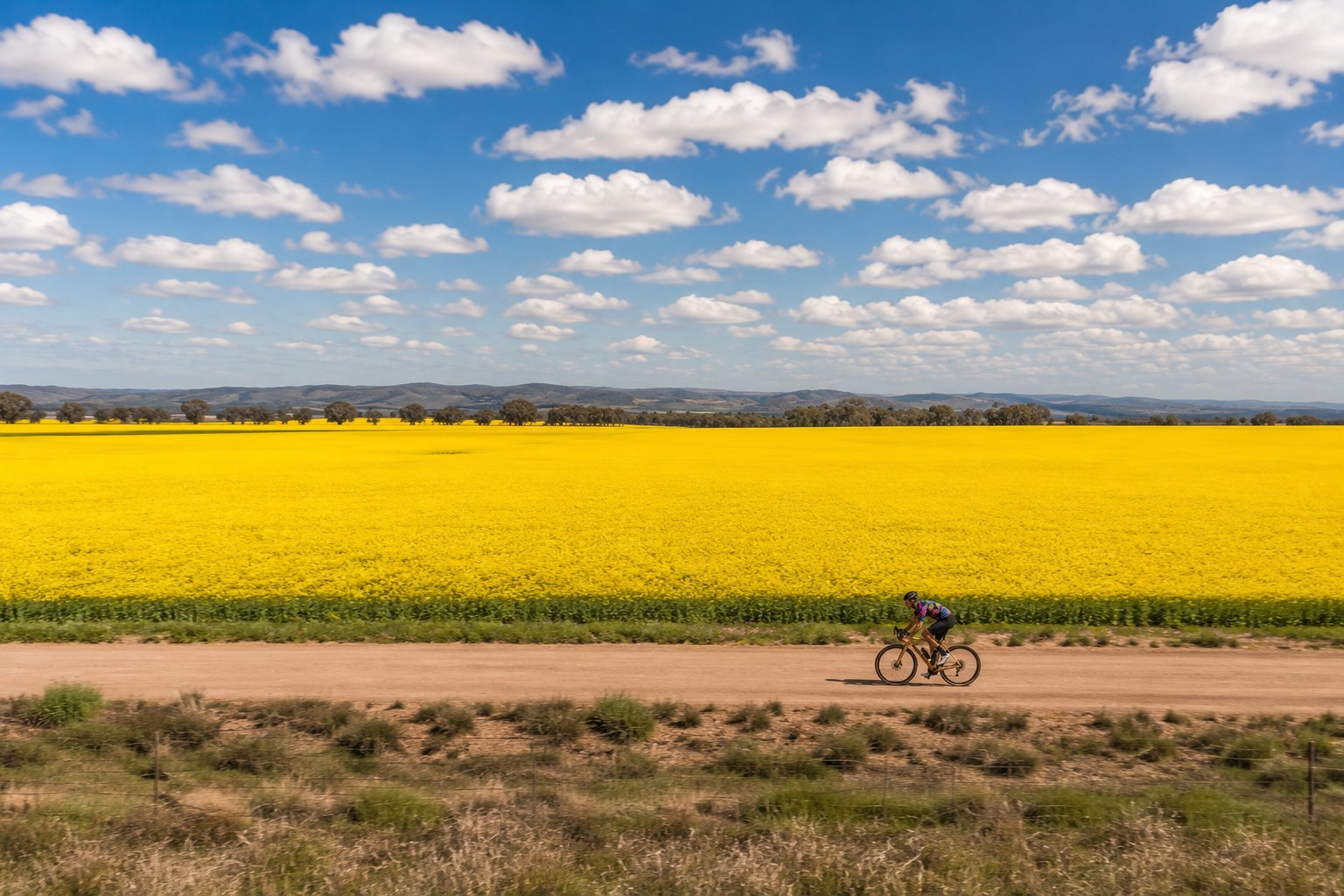
Ballidu Gravel: The Last 10% Before Race Day
By the time you're reading this, your fitness is probably about where it's going to be. There's no magic interval session left to find another 20 watts. What is still worth thinking about is whether your bike is actually ready to spend four or five hours rattling across the Wheatbelt.
The Ballidu course isn't particularly technical, but like most other gravel races it has a tendency to punish bikes that are only “good enough”. Long stretches of coarse gravel, corrugations and plenty of vibration all add up over the course of the day. A bike that feels perfectly comfortable for the first hour can become surprisingly fatiguing.
Tyre Pressure: Chase Grip, Not Speed
If there is one adjustment worth experimenting with, it's tyre pressure.
Most riders still tend to overinflate gravel tyres because they're worried about rolling resistance. In reality, once the surface gets rough enough, excessive pressure usually makes you slower. Every bump that launches the bike upwards is energy you're no longer putting into moving forward.
For Ballidu, we'd generally suggest treating the following as a sensible starting window rather than an exact number:
- 40 mm tyres: approximately 28–34 psi
- 45 mm tyres: approximately 24–30 psi
- 50 mm tyres: approximately 20–26 psi
Rider weight obviously matters. A 60 kg rider can comfortably sit near the lower end, while someone around 100 kg will tend towards the higher pressures.
Our favourite tyre pressure calculator here at TLS is the SILCA version. For an easier-to-use calculator, we like the SRAM version. You will get different answers from different calculators.
The goal isn't to run the lowest pressure possible. You're looking for the point where the tyre conforms to the terrain without feeling vague through corners or bottoming out on your rim on square edges. If you've never experimented with pressures this low, it's worth spending an afternoon finding that sweet spot before race day. Be deliberate, and be careful.
Clean is Smooth. Smooth is Fast.
Dust, old lubricant and worn chains quietly rob power from every single pedal stroke. Individually it's tiny. Over four hours and 20,000-plus pedal strokes it adds up.
If you're a DIY kind of rider, at the very least you'd be checking:
- Chain wear using the correct tool
- Fresh lubrication appropriate for dry conditions — we recommend a wax-based product
- No stiff links hiding in the chain
At the workshop level, we'd go a few steps further:
- Cranks out and crank bearings checked
- Chainring teeth checked for wear
- Cassette removed, deep cleaned and teeth inspected
- Chain replaced if necessary, with factory lubricant stripped and wax applied
- Jockey wheel teeth and bearings checked
- Front and rear hub bearings checked
- Pedal bearings checked
- At least 2 mm of bar-tape cushioning in your favourite hand position
- Existing bike-fit dimensions retained, while obvious setup shortfalls and discomfort are addressed where possible
Comfort Wins Long Races
The most frequent culprit that costs people results isn't mechanical failure — it's the rider getting beaten up slowly over the course of four-plus hours.
Two adjustments make a huge difference.
Roll Your Brake Hoods Slightly Inwards
Only slightly.
Many gravel bikes still have hoods sitting perfectly vertical because that's how they left the shop. Rotating each hood inwards by just a few degrees allows your wrists to sit in a much more neutral position. We've all seen our local hardcore gravel nut running their hoods so far inwards they almost point directly at each other… don't go that far.
That small change often reduces hand numbness, sore shoulders and tension through your forearms during long rides. It doesn't sound like much until you've spent several hours riding rough gravel.
Move Your Controls Within Reach
You shouldn't have to stretch to comfortably reach the brake levers from the hoods.
Many riders unknowingly spend hours partially extending their fingers every time they cover the brakes. That constant reach creates fatigue through the hands, wrists and forearms.
Most modern Shimano and SRAM levers offer reach adjustment. Spending five minutes dialling this in can completely change how relaxed your upper body feels by the final hour.
One more comfort tip — just for fun: the overwhelming majority of riders benefit from a neutral, flat saddle or one with an ever-so-slightly negative, nose-down angle. It's better for your pelvis, hips and lower back.
Don't Leave It Until Friday
When mechanics visit their friends at other bike shops late on a Friday, we all open with the same lame joke: “I'm racing this weekend. Can you guys do a major service today?”
If you're making any setup changes, do them now — not the night before the race.
The riders who have the best days at Ballidu usually aren't the ones with the fanciest equipment. They're the ones whose bikes are so well sorted they disappear underneath them, letting them focus entirely on the next horizon.
We'll see you in Ballidu.
Want more info, or keen to enter? Visit the official Ballidu Gravel website.