

This blog entry is mostly anecdotal, with some obvious scientific shortcomings in terms of my two ‘tests’ – but lots of engineering and physics references to support (or disagree with) my findings. I’ve kept the ‘on bike’ findings separate from the physics lecture further down. If you have no friends and no plans for today, by all means read on through.
Given my interest in suspension performance and the overall fun-factor of a good morning out on a mountain bike, it was only a matter of time before I really took a good look at the ride characteristics of a full 29er vs a Mullet setup. Anyone who’s read any MTB media in the last decade can probably guess the use case for each wheel size. 29″ is universally agreed upon to be ‘fast and stable’, while 27″ wheels are ‘playful and agile’. Combining the two sizes on a mullet bike is supposed to be a ‘best of both worlds’ setup. The big front wheel plows over obstacles and has lots of traction, the smaller rear is easier to jump, slide, lean and whip through tight technical sections…..but there MUST be a trade off??
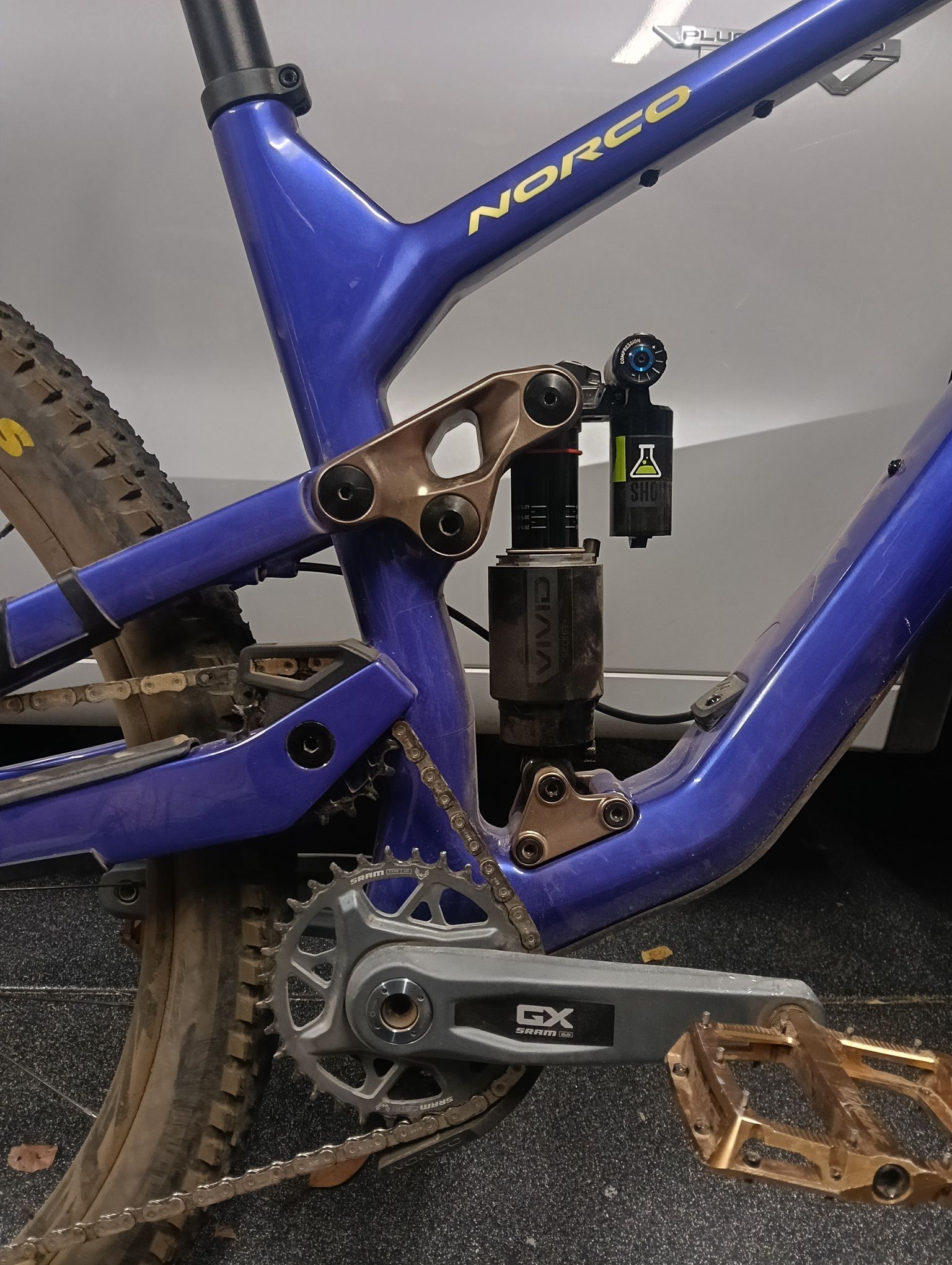
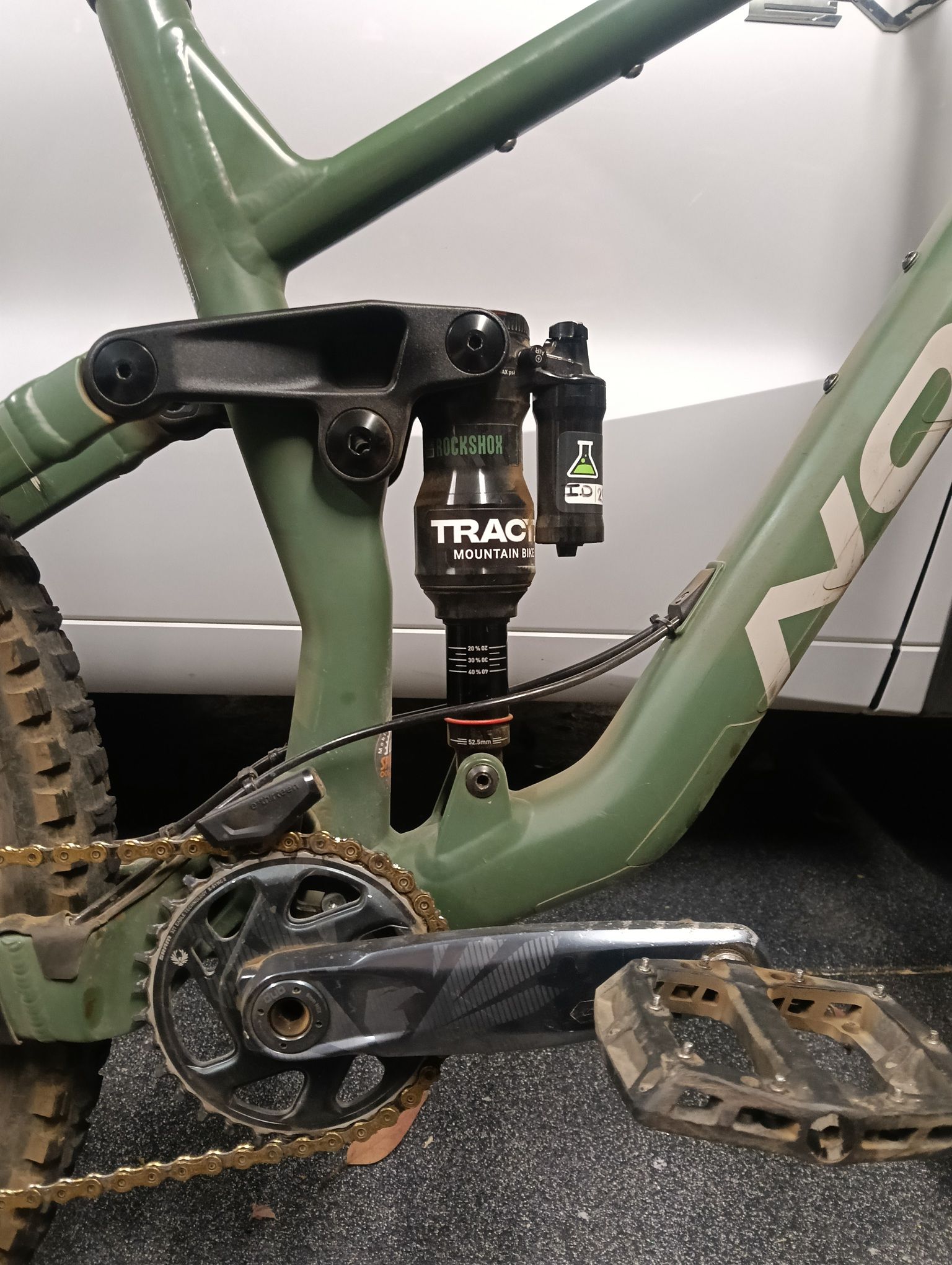
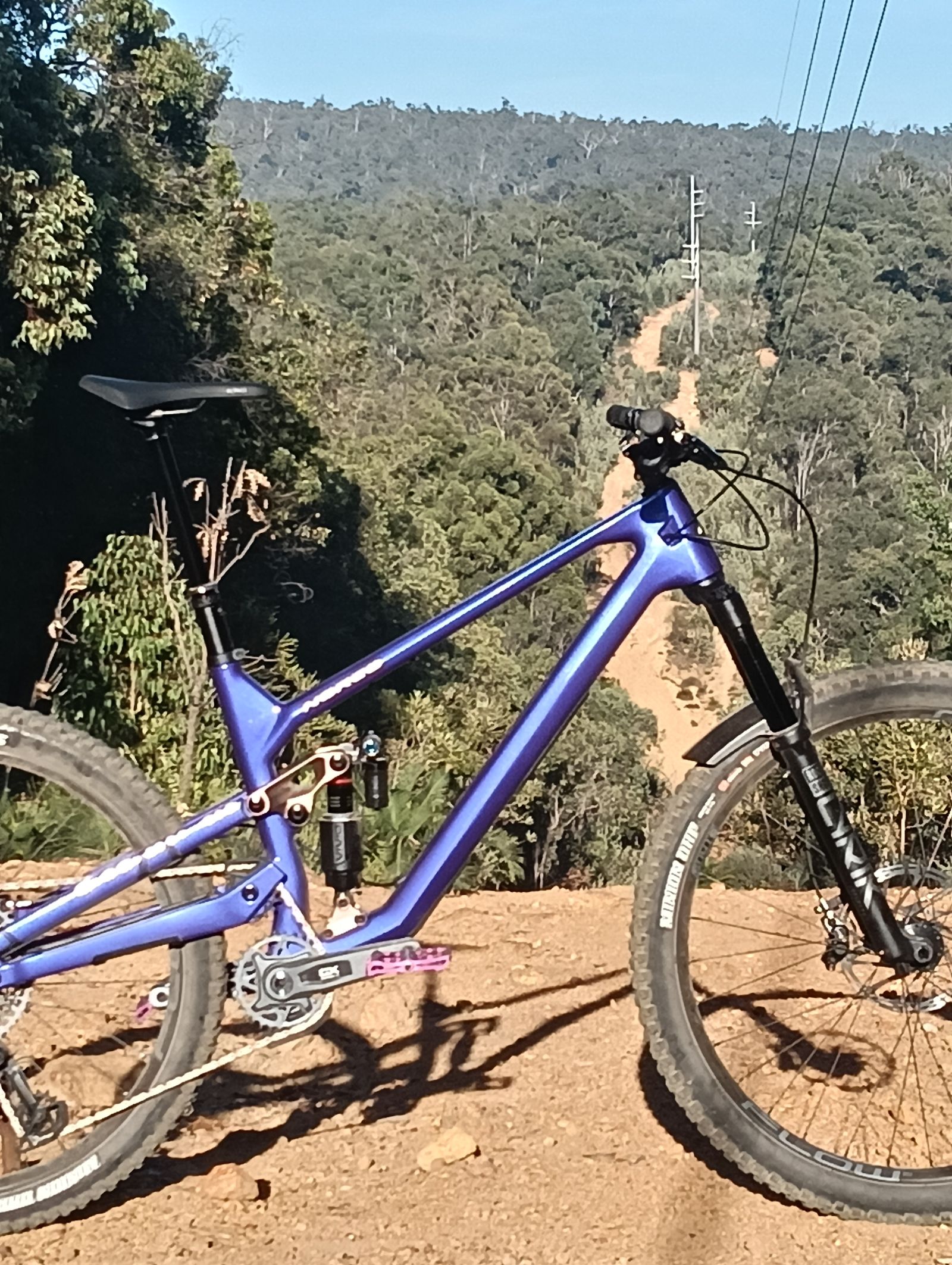
Conveniently, I own a 29er AND a mullet bike – A Norco Sight and a Norco Optic. The Sight is the 2023 A1 model running the long-established 4 bar Horst linkage as full 29er. The Sight is the ’24 model running the Virtual High Pivot system, and came out of the box as a Mullet (27 rear, 29 front)
The setup was simple enough. I swapped the wheelsets between the bikes, and fitted the 29″ shock mount kit to the Optic. The Sight didn’t get any hardware swaps, just a straight wheel size change and nothing else besides shock tuning on trail.
It’s important to note here that there’s no ‘goal’ here. I’m not trying to make a mullet ride like a 29, nor am I trying to make one bike ride like the other. The only benchmark is my existing impression of each bike, from which I’ll note any changes with a different wheel setup.
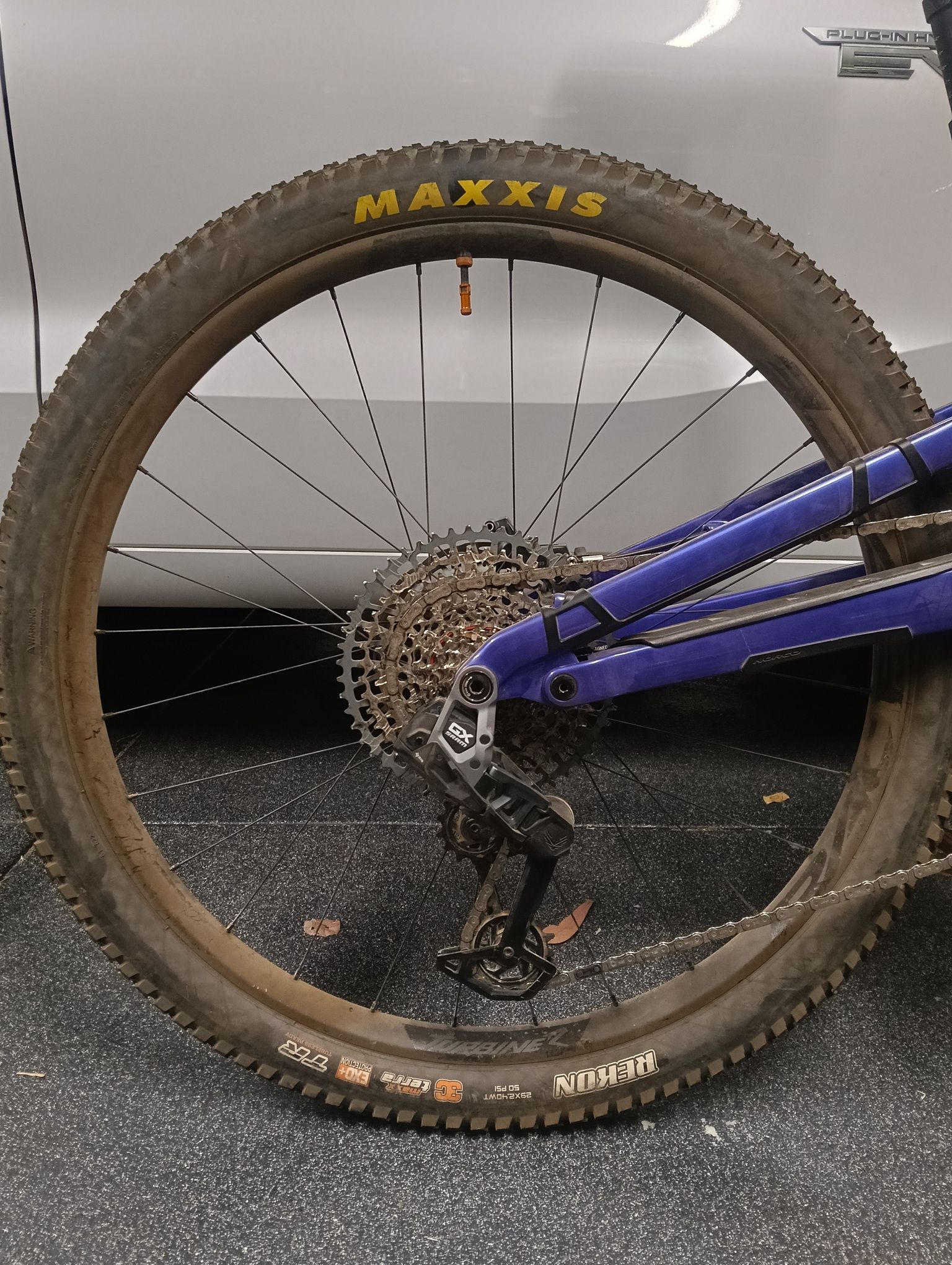
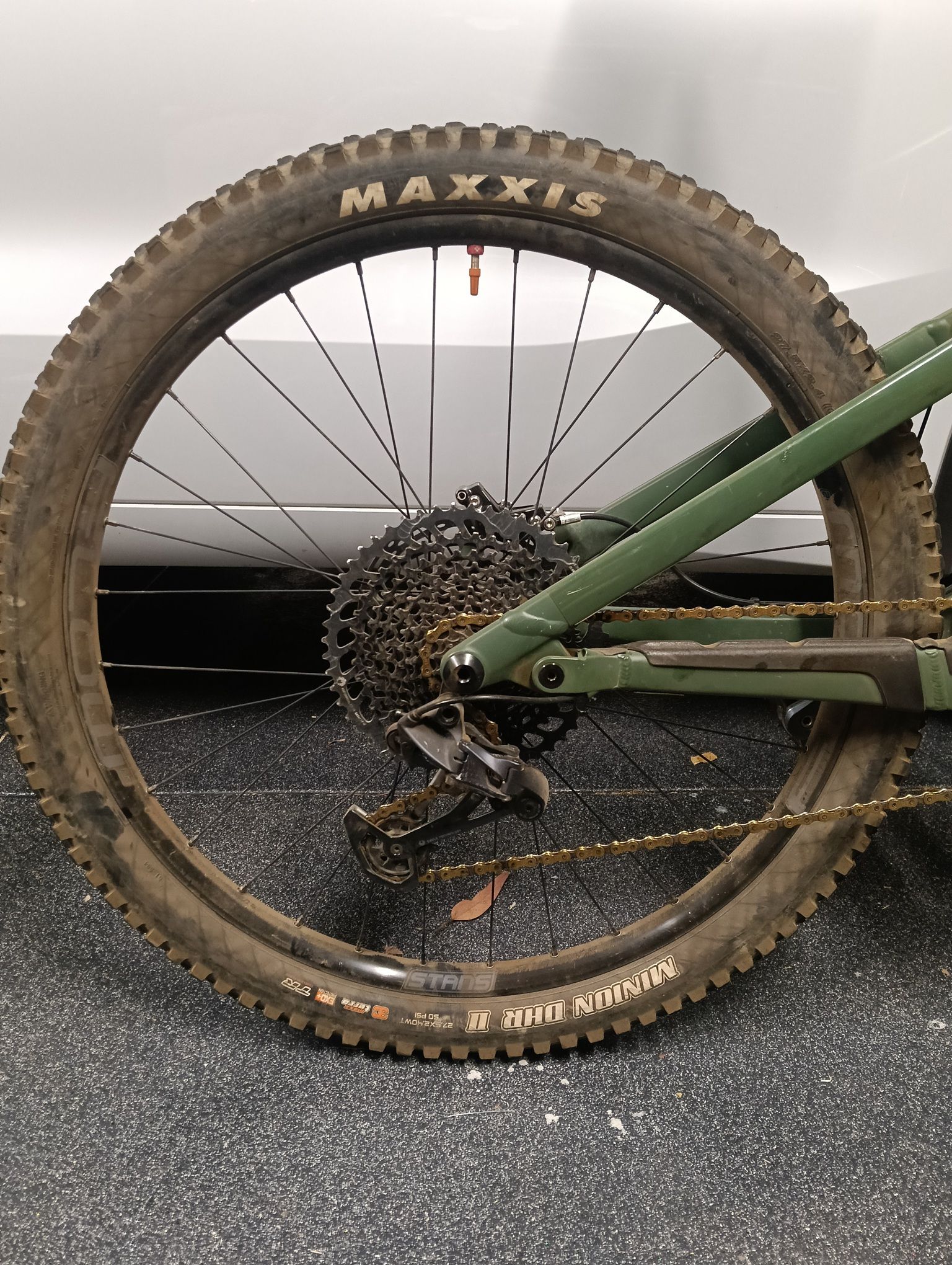
The trail used for the test is made up of a series of ‘point and shoot’ segments that can be linked together at high speed with enough commitment. Super fast flow in the top half, chunkier and rockier in the bottom half. 220 metres of vertical drop per lap, so plenty of opportunities to let both bikes eat on the way down and demonstrate their willingness to pedal back up. I consider rear tyre choice to be almost irrelevant when riding WA Pea Gravel, on the basis that NOTHING works on gravel. Between the very worn out 29″ Rekon Race and the more aggressive DHR on the 27″ wheel, the difference in traction was never noticed.
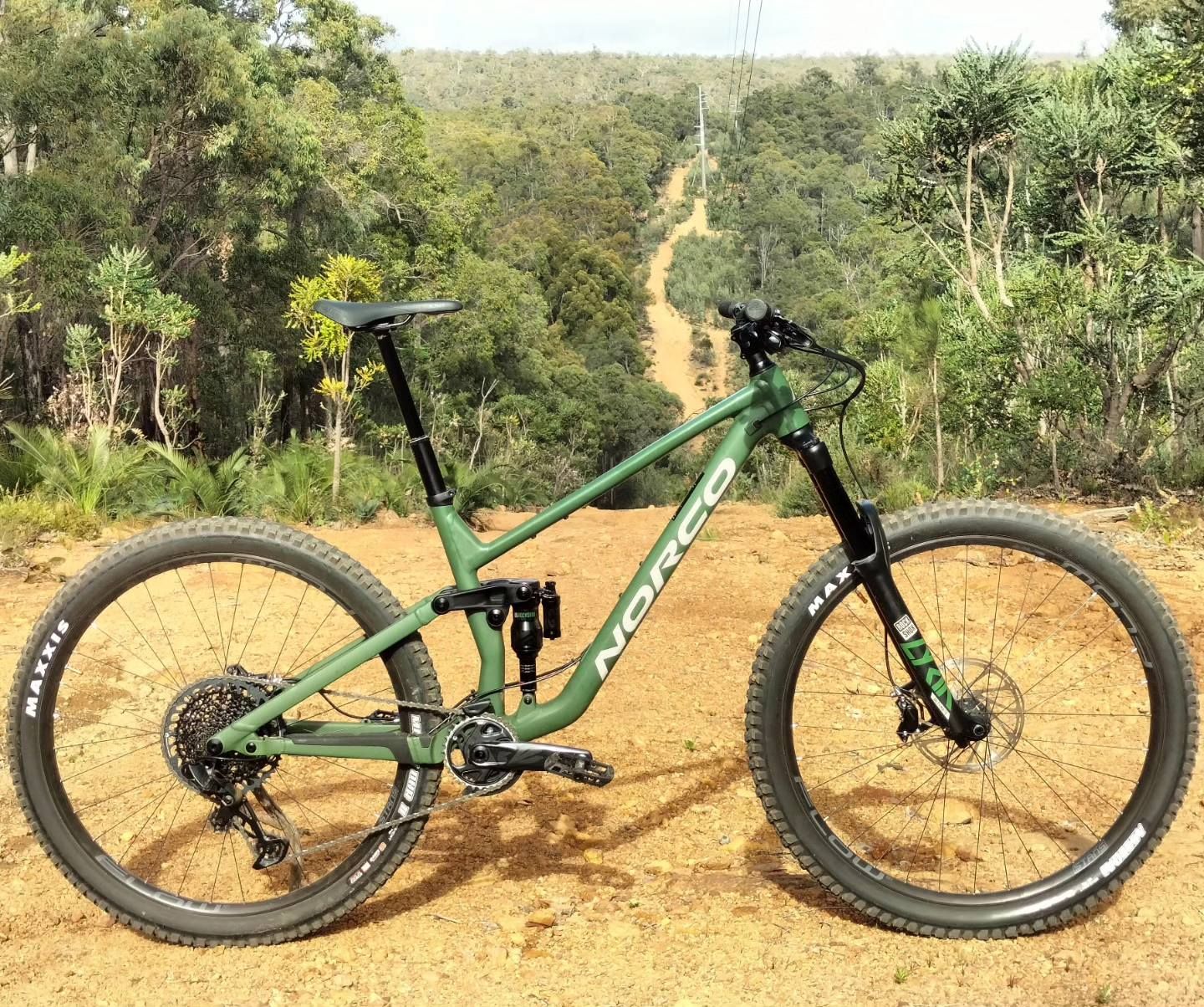
Day 1: The 29″ Norco Optic
After my sighting lap, it was abundantly clear the front tyre was too hard. Once those few PSI were removed, the Optic both woke up and settled down. The front wheel tracked properly, and I was getting less feedback through my hands.
I couldn’t believe how effortless the pace was. I now wasn’t dragging brakes because the bike was nervous, but out of pure self preservation and risk management. Traction was abundant for the fast corners and the heavy braking zones. Feedback through my feet was minimal, and I never once slipped a pedal or lost my footing. This would end up being one of the most telling observations of the whole experiment. The magic of the Virtual High Pivot and the ‘rearward’ axle path that goes with it is obviously a factor in how the rear wheel gets out of it’s own way over obstacles.
The stability at speed was noticeable t00. The full 29 setup being less dramatic and requiring less bike & body language over any given feature. Get off the brakes, let it run, carve the corners and pick whatever line you fancy through the chunky stuff.
The long, slow climb back up the hill revealed to me that 29″ wheels are undeniably a more efficient way to cover ground on a bike. Every revolution of that rear wheel, in any given gear, travels just that little bit further up the hill. 115-ish millimeters per revolution, versus a 27″ wheel with the same tyre on it.
On subsequent runs down the hill I paid more attention to the rear shock. My one and only change? I went 1 click slower on the rebound. Compression was already wide open, and I left it there.
The Optic in full 29er mode felt far more capable than its 140/125mm travel figures suggest. I had never once felt held back by the original mullet setup, but the kinematics of the VHP link and the 29″ wheel work together to shave a bit more off the top of Every. Single. Bump. Over the course of a few km of descending, this really compounds.
Day 2: The 27/29 Norco Sight
This was an eye opener. I’ve had the Sight longer than the Optic, and spent more time on it – hence I’m comfortable with the claim that I know how it ‘should’ ride and handle.
Prior to this test I’d already spent some time riding the 27/29 setup around the trails near home, as well as doing school rides and coffee runs. I honestly thought the bottom bracket drop would prove too severe, and that a single pedal strike just ‘riding around’ would suggest that it’d be awful on real trails. This never actually happened, and I loved how it rode – I couldn’t wait to get it out into the hills for a real shakedown.
Out on the REAL trails the Sight had a split personality. It absolutely railed the flatter, twistier sections of trail…..and it was just as quick getting up to speed when gravity took over from gears. However, at the first sign of some chunky bits, the Sight got hung up on every square edge, AND generated so much feedback through the pedals that I lost my footing once on every run – an issue I have never had with my choice of shoes and pedals.
The effect on the rear suspension was clear. It was blowing through it’s travel even with correct static sag. Cranking up low speed compression and opening the rebound 3 clicks helped to preserve first 50% of the shock stroke but ultimately didn’t solve the bottom out issue, and made the rear wheel hang ups even more jarring. More in depth air spring tuning (volume reducer) would help address the bottom out issue, but the damping would need tuning far beyond what the adjusters are capable of (to enable fast enough response to get out of it’s own way)
It was pretty clear that the bikes behavior had shifted towards being more maneuverable but at the expense of rollover efficiency. Quick, successive hang-ups made me ride heavier on my hands, which used up fork travel, which made the bike less stable…which made me slow down…When I needed some pedal strokes it definitely got back up to speed thanks to lower rotational inertia, but the whole cycle of being slowed down would start again. Over the course of 880+ metres of descending, this requires so much more rider input and definitely wore me out faster.
The Science of Send
A 27.5-inch rear wheel drives higher shock shaft velocities and larger instantaneous damping loads than a 29-inch wheel when both encounter the same obstacle at the same speed. The reason is geometric. A smaller wheel has a steeper angle of attack – the imaginary line from the contact point on the ground up to the top of the obstacle – The smaller wheel therefore has to climb faster to get over the obstacle. Damping is speed-sensitive (imagine walking through neck-deep water in a swimming pool, then trying to ‘run’ through it) – so the rear shock on the Sight spent more dealing with mid to high shaft speeds than it otherwise would with a 29″ wheel fitted.
So if a 29″ wheel has a shallower “attack angle” at any given obstacle height, the axle path over a bump is flatter and the wheel doesn’t ‘fall’ quite as far into holes in the terrain. This is why I was able to slow the rebound by 1 click on the optic. The back end of the bike didn’t need to work so quickly to trace the ground. This is also why there was no real negative impact on the compression of the rear shock. It was actually generating slower shaft speeds for any given hit vs what it’s been tuned to handle. Lower peak damping forces –> less feedback through the feet –> calmer, more stable ride at speed and especially through the chunk.
“Angle of Attack” for different wheel sizes can be a bit meaningless until you visualize it properly, so imagine this: A skateboard wheel versus a lego brick, or the same wheel versus a single gain of sand. One will result in a crash, one won’t. The size of the obstacle relative to the wheel trying to roll over it is incredibly important – which begs the obvious question “why not just make wheels EVEN BIGGER”? Well, the trade off then becomes some combination of lazy or awkward handling on tight twisty trails, and a more flexible / less durable set of wheels. I’ve deliberately ignored flex/strength for this blog but it could be an entire blog entry on it’s own. Head on over to PinkBike to see where the wheel size debate is going…
So what’s the actual conclusion then?
- A bike that has been properly engineered to run different wheel sizes will out-perform a bike with the ‘wrong’ size wheel fitted. Who knew?!
- The wrong size wheel is still heaps of fun.
- ‘Head to Head’ style blogs take AGES to write. Could have just gone for another ride in the same amount of time…